Your summer bedtime is lying to you. Here's how to stop late sunsets and scrolling from stealing sleep.
A practical guide to why summer nights, late sunlight, warm rooms, and phone use can push your sleep later, plus a realistic two-hour wind-down plan and clear signs that sleep trouble deserves real help.
Your summer sleep problem probably is not that you "lack discipline." It is that your brain is getting a bunch of stay-awake signals at the exact time you want it to shut down.
Long daylight, hotter rooms, late plans, caffeine after dinner, and the tiny stadium light in your hand all push bedtime later. Then morning still shows up on time. That mismatch is why a summer week can feel fun at night and miserable by Thursday.
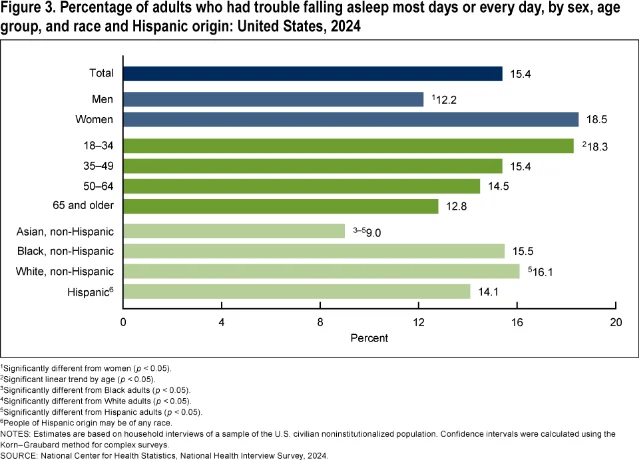
The newest CDC sleep snapshot makes the problem feel less like a personal flaw: in 2024, 30.5% of U.S. adults slept under 7 hours, and adults ages 18-34 had the highest rate of trouble falling asleep most days or every day at 18.3%. 1
The real issue: your body reads light as a command
Your body does not only care what the clock says. It cares about light.
Sleep timing is partly controlled by circadian rhythm, the internal timing system that uses light as one of its strongest cues. Evening light can suppress melatonin and shift the body clock later, which makes sleep feel farther away even when you are tired. 2
That matters more in summer because the day is louder. The American Academy of Sleep Medicine's Sleep Education site warns that long summer evenings can delay melatonin, and in some places it can stay light outside until after 10 p.m. 3
Phones add a second hit. A review on youth screen media and sleep found that most studies it reviewed linked screen media use with delayed bedtime or less total sleep time, with likely reasons including time displacement, psychological stimulation, light exposure, and higher alertness. 4
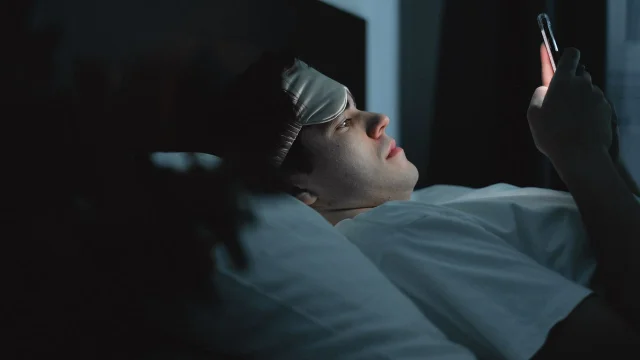
Translation: the phone is not magic poison. But if it gives you light, drama, messages, gaming, shopping, news, and "one more video" at midnight, your brain gets a very reasonable message: stay online, stay alert.
What late-night scrolling actually does
A small but useful lab study compared reading on a light-emitting eReader with reading a printed book before bed. The participants were healthy young adults, and the light-device condition made them take nearly 10 minutes longer to fall asleep, delayed their melatonin timing by more than 1.5 hours, reduced REM sleep, and left them sleepier the next morning. 2
Do not overread that as "one TikTok ruins your hormones." The study was controlled and small. The more useful takeaway is simpler: bright, engaging screen time right before bed can make your body act like bedtime has moved later.
The problem gets worse when the next morning cannot move later. Work, class, an internship, a pet, a sibling, or a 9 a.m. group chat does not care that your body clock thinks midnight was still evening.
That is how sleep debt builds without one dramatic all-nighter. You lose 40 minutes here, 70 minutes there, then wonder why you feel emotionally fragile after lunch.
The two-hour sunset rule
You do not need a perfect wellness routine. You need a runway.
Try this: two hours before the time you actually want to fall asleep, make your environment start acting like night. This is not the same as getting in bed. It is the part where you stop feeding your brain noon-level signals.
| Signal to turn down | What to do tonight | Why it helps |
|---|---|---|
| Outdoor and room light | Close blinds, dim overhead lights, use a lamp instead of full-room brightness. | Sleep Education recommends limiting sunlight exposure and starting a regular indoor evening routine about two hours before bedtime during summer. 3 |
| Phone intensity | Turn on night mode, lower brightness, and put the phone across the room for the final 30 minutes if you can. | CDC says evening light from electronics and technology use can contribute to late bedtimes in adolescents. 5 |
| Heat | Make the room cooler before bed, use a fan, swap heavy bedding, and keep the room dark. | Sleep Education recommends a dark, cool, comfortable bedroom and lighter bedding in summer. 3 |
| Brain noise | Pick one boring wind-down activity: shower, stretch, read, fold laundry, prep tomorrow's bag. | The point is repetition. Your brain learns, "This is the off-ramp." |
The phone rule is usually the hardest one, so make it less dramatic. You do not have to become someone who charges their phone in another zip code.
Start with one of these:
- No phone in bed. Use it in a chair, on the floor, wherever, just not under the blanket.
- No algorithm after the wind-down alarm. Music, a podcast, or a saved article is less sticky than an endless feed.
- Set a "last reply" time. Tell people you are disappearing. Then actually disappear.
- Move the charger. If the phone has to live across the room, morning-you also gets an easier wake-up.
What to do when you are already wide awake
If you are in bed and wired, do not turn the bed into a frustration arena.
Give yourself about 20-30 minutes. If you are still awake, get up and do something boring in dim light. Read a few pages. Sit somewhere quiet. Do not start a new episode. Do not check whether your ex posted. The goal is to let sleepiness come back without teaching your brain that bed equals scrolling, stressing, or arguing with the clock.
If your schedule is already wrecked, fix the morning first. Wake up at roughly the same time for a few days, get outdoor light early, and avoid long late naps. CDC's sleep guidance for students emphasizes consistent bed and rise times, dimmer evening lighting, and technology limits at night. 5
Also, be careful with the tempting shortcut: melatonin. It is not a general-purpose knockout button. MedlinePlus notes that sleep aid medicines and supplements should be discussed with a health care provider, and most sleep aid medicines are generally for short-term use. 6
When it is more than a bad sleep week
Most summer sleep weirdness is annoying, not dangerous. Still, there are times when "I'll fix my routine" is not enough.
Consider getting real help if any of this is happening:
- You regularly take more than 30 minutes to fall asleep.
- You wake up several times and cannot fall back asleep.
- You feel sleepy during the day often enough that school, work, driving, or your mood is taking a hit.
- Someone says you snore loudly, gasp, choke, or stop breathing during sleep.
- You have crawling or tingling sensations in your legs that get worse at night and improve when you move them.
MedlinePlus lists those patterns as signs that a sleep disorder may be involved. 6 That does not mean panic. It means stop trying to solve a possible sleep disorder with a better pillow and vibes.
Tonight's realistic version
Do not overhaul your whole life tonight. Pick the smallest lever that actually changes the signal your brain gets.
If you want the easiest version, do this:
- Close the blinds or curtains two hours before bed.
- Dim the room.
- Put your phone on night mode and lower the brightness.
- Move it out of the bed for the last 30 minutes.
- Keep the room cool enough that you are not waking up sweaty.
That is it. No 14-step routine, no moral lecture, no pretending summer nights are not fun.
The goal is not to become a perfect sleeper. It is to stop accidentally telling your body that midnight is still daytime.
参考ソース
- 1CDC NCHS Data Brief: Short Sleep Duration and Sleep Difficulties Among Adults, United States, 2024
- 2Evening use of light-emitting eReaders negatively affects sleep, circadian timing, and next-morning alertness
- 3Sleep tips for the summer
- 4Youth screen media habits and sleep: sleep-friendly screen-behavior recommendations for clinicians, educators, and parents
- 5CDC: Sleep and Health
- 6MedlinePlus: Sleep Disorders
このコンテンツについて、さらに観点や背景を補足しましょう。